
PACKAGING MATERIALS
Flexible Packaging Materials for Different Product Requirements
Flexible packaging performance depends heavily on the material structure. Barrier, sealing, stiffness, printability, appearance, and product protection should be reviewed together before production.
ZAPAC supports material selection based on product sensitivity, filling conditions, shelf-life targets, packaging format, and destination market requirements.
Explore Material Structures→ Request a Material Recommendation→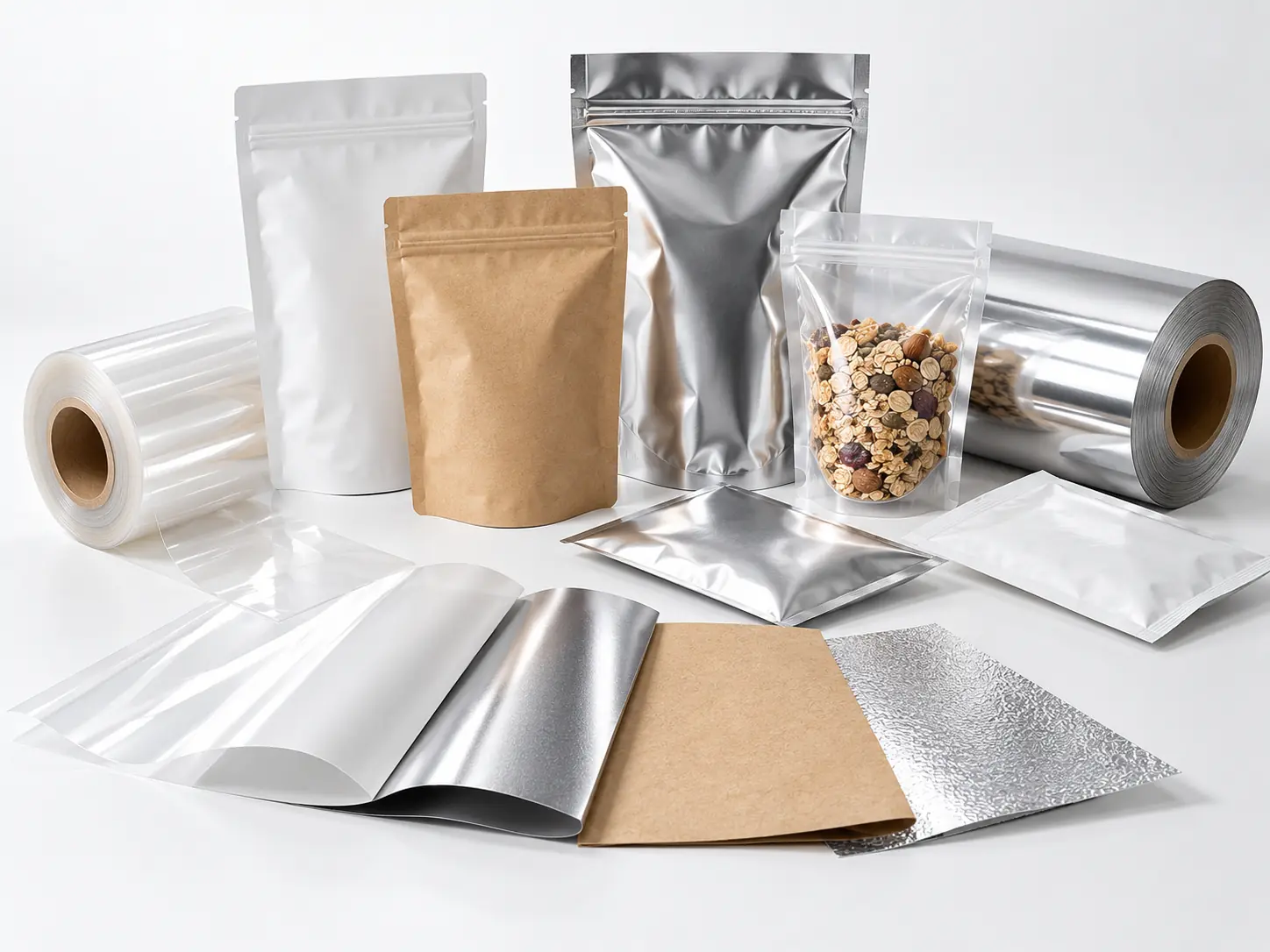
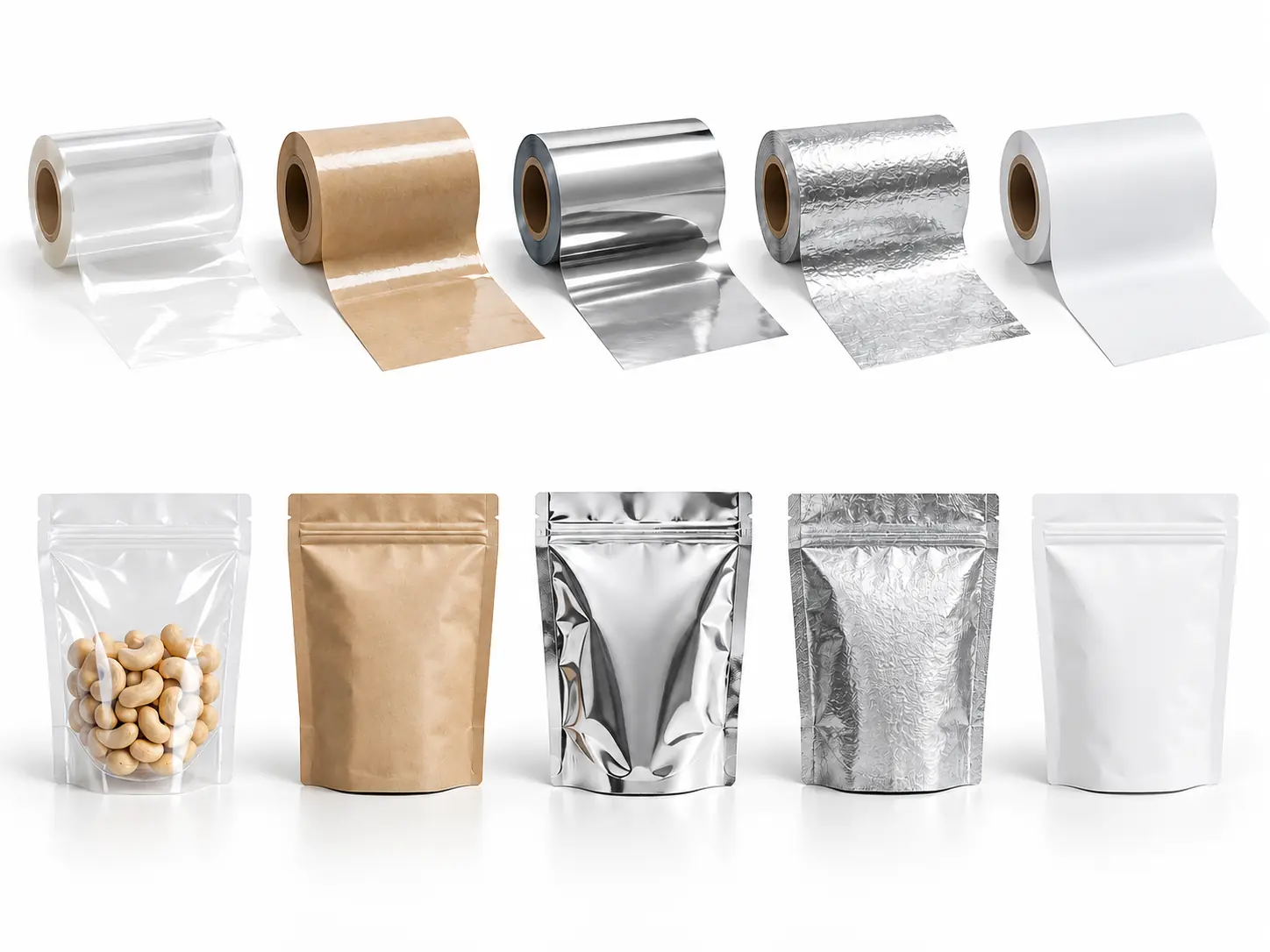
Flexible packaging materials can include clear, white, metallized, aluminum foil, and kraft-based structures. Each option offers different levels of barrier protection, sealing, stiffness, appearance, and product visibility.
Common Flexible Packaging Material Structures
Different laminated structures can provide different levels of barrier performance, sealing, stiffness, appearance, and protection. The final structure should be matched to the product and packaging application.
PET / PE
A common laminated structure offering good printability, sealing performance, and moderate protection for many dry and retail products.
PET / VMPET / PE
A metallized structure that can improve moisture, oxygen, aroma, and light barrier performance while maintaining a strong visual appearance.
PET / AL / PE
A higher-barrier structure suitable for products that require stronger protection from oxygen, moisture, aroma loss, or light exposure.
Kraft Laminated Structures
Used when a natural paper appearance is preferred while still requiring suitable inner sealing and barrier layers.
Clear Laminated Structures
Suitable for projects where product visibility is important and barrier requirements can be met with transparent materials.
How to Choose the Right Packaging Material
Material selection should start with the product and its protection needs, not appearance alone. Review the key factors below before confirming a packaging structure.
Moisture Protection
Consider how sensitive the product is to humidity, moisture gain, or moisture loss during storage and distribution.
Oxygen Barrier
Review whether oxidation, flavor changes, or product degradation may be affected by oxygen exposure.
Aroma Retention
Products such as coffee, tea, spices, pet treats, and other aromatic products may require stronger aroma retention.
Light Protection
Some products may need opaque, metallized, or aluminum-based structures to reduce light exposure.
Puncture & Strength
Product shape, sharp edges, fill weight, transportation, and handling conditions can affect required film strength.
Sealing Performance
The sealant layer should match the filling method, sealing temperature, pouch format, and closure requirements.
Barrier Performance Comparison
Barrier performance varies by material structure, thickness, product requirements, and storage conditions. The comparison below is a general reference and final specifications should be reviewed for each project.
PET / PE
• Moisture:Medium
• Oxygen:Low–Medium
• Light:Low
• Aroma:Medium
PET / VMPET / PE
• Moisture:High
• Oxygen:High
• Light:High
• Aroma:High
PET / AL / PE
• Moisture:Very High
• Oxygen:Very High
• Light:Very High
• Aroma:Very High
Kraft Laminated Structures
• Barrier performance depends on the internal laminate structure.
Material Appearance & Finish Options
Material structure also affects how the final package looks and feels. Appearance should be reviewed together with printing, finishing, product visibility, and barrier requirements.
Clear
Suitable when product visibility is important and the required barrier level can be achieved with transparent materials.
Metallized
Provides a metallic appearance while supporting improved light, moisture, oxygen, and aroma barrier performance.
Kraft
Creates a natural paper appearance and can be combined with laminated inner layers for sealing and protection.
Opaque / White
Provides a clean printing surface, strong color contrast, and improved product concealment or light protection.
Finishing options such as matte, gloss, soft-touch, spot UV, holographic, and other special effects may also be available depending on the material and printing method.
Food-Contact & Application Review
Material suitability should be reviewed together with the product, filling process, sealing conditions, storage requirements, and destination market.
Product Compatibility
Review whether the selected material structure is suitable for direct contact with the intended product, including oils, powders, dry foods, liquids, or other product types.
Filling & Sealing Conditions
Consider filling temperature, sealing temperature, product dust, oils, liquids, closure type, and the packaging equipment used during production.
Destination Market Requirements
Material documentation and compliance requirements may vary by product category and destination market, so project-specific requirements should be confirmed before production.
Final material and documentation requirements should be confirmed according to the specific product, application, and target market.
Common Material Selection Mistakes to Avoid
Choosing the wrong material structure can affect product protection, sealing, shelf life, appearance, and overall packaging performance. Reviewing the points below early can reduce unnecessary changes later.
Choosing by Appearance AloneMoisture Protection
A material may look attractive but still fail to provide the barrier, sealing, or strength required for the product.
Ignoring Shelf-Life Requirements
Different shelf-life targets can require different levels of moisture, oxygen, aroma, or light protection.
Using More Barrier Than Needed
Higher-barrier structures are not always necessary and may increase material cost without providing a practical benefit.
Not Reviewing Filling Conditions
Filling temperature, product oils, powder dust, sealing method, and equipment can all affect material suitability.
Material RFQ Information Checklist
The more product and application details you provide, the easier it is to review a suitable material structure and packaging direction.
Product Information
• Product type
• Product form
• Fill weight or target volume
• Shelf-life target
• Storage conditions
• Filling method
Packaging Requirements
• Pouch format
• Target size
• Barrier expectations
• Transparency or opacity
• Finish requirements
• Destination market
If some details are not yet confirmed, share what you already know and we can review the remaining specifications together.
Request a Material Recommendation→Flexible Packaging Materials FAQ
Find answers to common questions about material structures, barrier performance, appearance, and packaging applications.
What is the best material for flexible packaging?
There is no single best material. The right structure depends on the product, barrier requirements, sealing, shelf-life target, filling method, and desired appearance.
What is the difference between PET / PE and PET / VMPET / PE?
PET / VMPET / PE generally provides stronger moisture, oxygen, aroma, and light barrier performance than a basic PET / PE structure.
When should aluminum foil laminate be used?
Aluminum foil laminate may be suitable when a product requires very high protection from oxygen, moisture, aroma loss, or light exposure.
Can flexible packaging include a clear window?
Yes. A clear window can be used when product visibility is important and the required barrier level can still be achieved with the selected structure.
Can kraft packaging still provide barrier protection?
Yes. Kraft appearance can be combined with laminated inner layers to provide sealing and barrier performance while maintaining a natural look.
How do I choose the right material thickness?
Thickness should be reviewed together with pouch size, fill weight, product shape, puncture risk, sealing requirements, transportation, and handling conditions.
Need Help Choosing a Packaging Material?
Share your product, packaging format, shelf-life target, filling method, and project requirements. We’ll help review the most practical material direction.
Request a Material Recommendation →About ZAPAC
Custom flexible packaging manufacturer supporting pouches, printed rollstock, materials, printing, finishing, and project coordination.
© 2026 ZAPAC STUDIOS LLC. All rights reserved.