
CUSTOM DIE CUT POUCHES
Custom Die Cut Pouches for Distinctive Retail Packaging
Custom die cut pouches help brands create distinctive packaging shapes while balancing product fit, usable fill space, sealing, opening, printing, and shelf presentation.
ZAPAC can review your product, target fill, shape reference, material structure, closure, artwork, and order requirements before sampling or production.
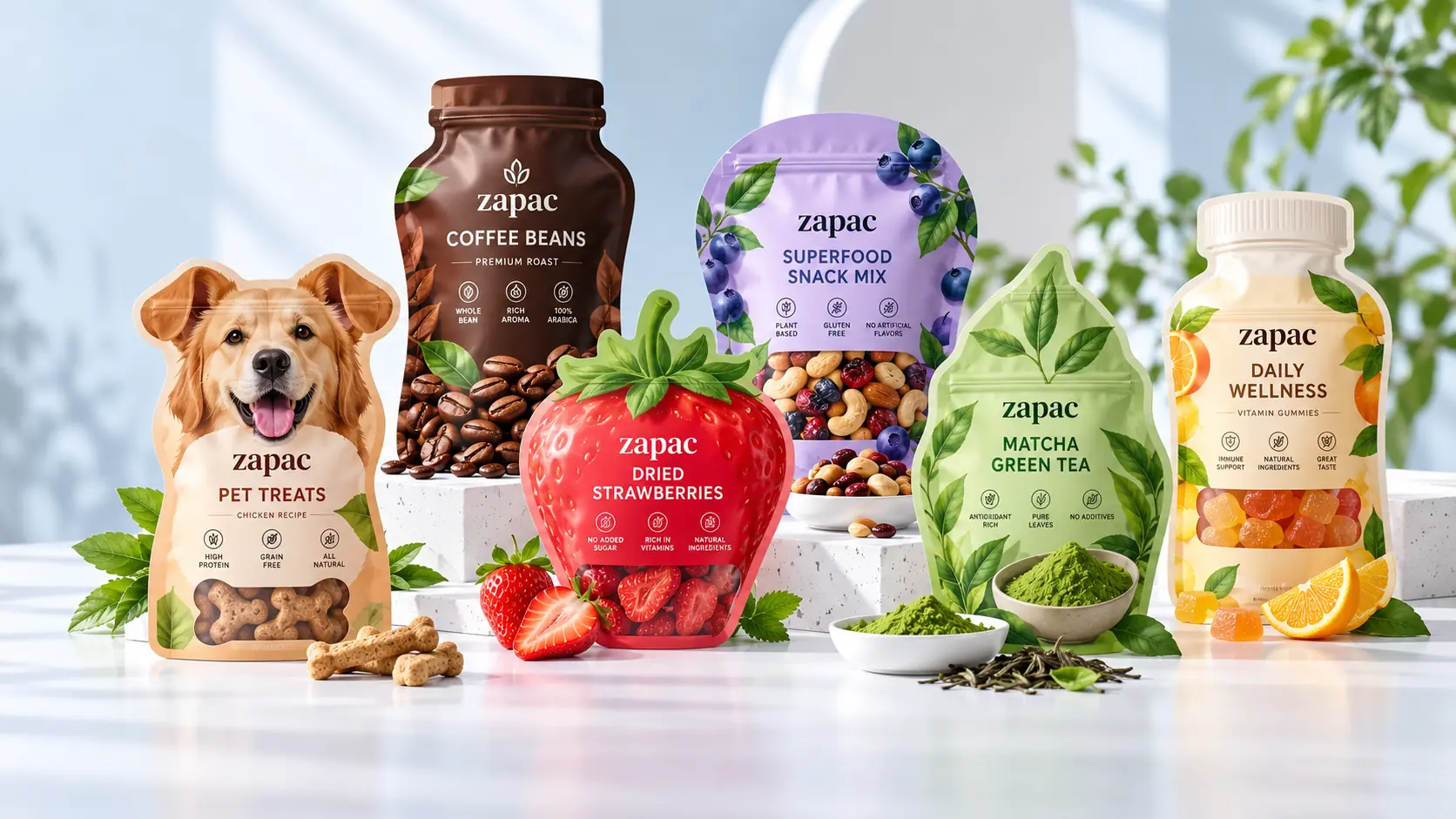
Custom Die Cut Pouches concepts for snacks, coffee, pet treats, powders, and retail products.
Custom Shape Support
Review pouch outline, usable fill area, opening width, seal path, and overall shape feasibility.
Material Review
Match barrier, sealing, filling method, shelf-life, and product protection needs with the right structure.
Printing & Finishing
Review artwork, print method, colors, matte or gloss finish, spot UV, and other visual effects.
Sample & Production Planning
Confirm samples, tooling needs, order quantity, timeline, and the most practical production route.
What Makes a Die Cut Pouch Work
A successful die cut pouch is not defined by shape alone. The pouch must still provide enough usable space for the product, maintain a continuous and reliable seal, and preserve its intended outline after filling. Shape, material, opening, closure, and artwork should be reviewed together before sampling or production.
Usable Fill Area
The pouch shape should leave enough internal space for the target fill weight or volume without creating narrow areas that are difficult to fill or seal.
Continuous Seal Path
The outer contour should allow a stable and continuous sealing area around the pouch to support strength, product protection, and consistent production.
Shape Stability
The final pouch should still look like the intended design after it is filled. Product density, headspace, gusset structure, and material stiffness can all affect the finished shape.
Die Cut Pouch Shape Options
Custom die cut pouches can be developed around different outlines, product formats, display needs, and functional features. The final shape should balance appearance, usable fill area, sealing, opening, and production feasibility.
Rounded Shapes
Soft curves and rounded outlines for a more distinctive retail presentation.
Bottle & Jar Shapes
Silhouettes inspired by bottles, jars, cups, or other product-related forms.
Product Silhouettes
Custom outlines developed around recognizable product shapes or category cues.
Window Shapes
Die cut windows can add product visibility while supporting a customized pouch appearance.
Character-Inspired Shapes
Original illustrated or themed outlines can be developed without relying on protected characters or brand IP.
Custom Outline Pouches
For projects based on your own sketch, reference shape, artwork, or packaging concept.
Design Around the Product
A successful die cut pouch starts with the product. Shape, size, opening, sealing, and artwork should be planned around how the pouch will actually be filled, handled, displayed, and used.
Start With the Product
• Product type
• Fill weight or target volume
• Filling method
• Storage and shipping conditions
• Shelf or hanging display requirements
The product determines how much usable space, opening width, bottom support, and barrier performance the pouch may need.
Then Refine the Shape
• Overall outline
• Body width and narrow areas
• Opening widthZipper or closure position
• Seal path
• Artwork safe area
The pouch outline should be refined around filling, sealing, opening, artwork, and production requirements—not appearance alone.
Opening & Closure Planning
A distinctive pouch shape still needs to be practical to fill, open, close, and use. The opening area, zipper position, tear notch, and seal width should be planned together with the pouch outline.
Easy Filling
The opening should be wide enough for the product and compatible with the intended filling method.
Easy Opening
Tear notches and opening areas should be positioned where the pouch can be opened cleanly without damaging the main shape.
Resealable Closure
Zippers or other closure features should be placed where they remain functional without interfering with the die cut outline or seal path.
Artwork & Cut-Line Safety
Die cut pouches require more careful artwork planning than standard pouch shapes. Important text, logos, barcodes, and design elements should stay inside safe areas and away from cut lines, seals, zippers, and other functional zones.
Keep Key Content Inside Safe Areas
Logos, product names, claims, and barcodes should be positioned away from the outer cut line and sealing area.
Allow Enough Bleed
Background colors and artwork should extend beyond the final cut line to reduce the risk of visible white edges after cutting.
Plan Around Functional Areas
Artwork should avoid interfering with zippers, tear notches, hang holes, windows, and other functional features.
Review the Final Dieline
Front, back, cut line, seal area, opening position, and artwork placement should be checked together before production.
Material & Barrier Options
The material structure should be selected based on the product, barrier requirements, filling conditions, sealing performance, shelf-life target, and desired appearance.
PET / PE
A common laminated structure for products that need good printability, sealing performance, and moderate protection.
PET / VMPET / PE
Suitable for projects that require improved moisture, oxygen, aroma, and light barrier performance.
PET / AL / PE
A higher-barrier option for products that need stronger protection from oxygen, moisture, aroma loss, or light exposure.
Kraft Laminated Structures
For projects that need a natural kraft appearance while maintaining suitable sealing and barrier performance.
Final material recommendations should be reviewed together with the product, pouch shape, filling method, closure system, and destination market.
Digital Printing vs Gravure Printing
Different printing methods suit different project stages. The right choice depends on order quantity, artwork stability, material structure, finishing requirements, and future reorder plans.
Digital Printing
BEST FOR FLEXIBILITY
• Product launches and new SKUs
• Smaller production runs
• Multiple artwork versions
• Faster testing and iteration
• No plate cost for suitable projects
Gravure Printing
BEST FOR SCALE
• Repeat orders and proven SKUs
• Larger production volumes
• Stable artwork
• Long-run color consistency
• Scale-up production planning
The recommended printing route should be reviewed together with order volume, artwork readiness, material structure, finishing requirements, and expected reorder frequency.
Request a Printing RecommendationSampling & Custom Tooling
Custom die cut pouches often require additional shape and tooling review before production. Sampling helps confirm the pouch outline, opening, seal path, usable fill area, and overall appearance before moving into larger orders.
01
Shape Confirmation
Review the pouch outline, target size, opening width, seal path, zipper position, and usable fill area based on the actual product.
02
Sample Review
Evaluate the physical sample or production proof for shape, filling, opening, sealing, artwork placement, and overall usability.
03
Tooling & Production Setup
Confirm the final dieline, custom tooling requirements, material structure, printing method, and production specifications before mass production.
Dedicated tooling may be required depending on the pouch outline, size, seal path, opening design, and production method.
Common Buyer Mistakes to Avoid
Die cut pouches require more coordination than standard pouch shapes. Avoiding a few common mistakes early can reduce unnecessary revisions, tooling changes, and production delays.
Too Much Detail in the Outline
Very complex edges, narrow sections, or sharp curves can reduce usable fill space and make sealing or cutting more difficult.
Opening Area Too Narrow
A distinctive shape still needs enough opening width for filling, product removal, and zipper or closure placement.
Artwork Too Close to the Cut Line
Important text, logos, barcodes, and claims should stay inside safe areas and away from cut edges and sealing zones.
Shape Distorts After Filling
A pouch that looks good when empty may change significantly after filling. Product density, headspace, material stiffness, and pouch proportions should be reviewed together.
RFQ Information Checklist
A more accurate die cut pouch quotation starts with the right project details. Share what you already know, and we can help review the remaining specifications.
Product & Shape Details
• Product type
• Fill weight or target volume
• Reference shape, sketch, or sample
• Target pouch size
• Opening and closure requirements
• Barrier or shelf-life requirements
Printing & Order Details
• Order quantity
• Number of SKUs or designs
• Artwork status
• Printing and finish requirements
• Sample or launch timing
• Delivery destination
If the final pouch size or material structure is not yet confirmed, we can review the project based on your product, fill amount, reference shape, and target use.
Ready to Share Your Project Details?
Send us your product, target shape, fill amount, quantity, artwork status, and any special requirements. We’ll review the next practical step with you.
Request a Die Cut Pouch QuoteFrequently Asked Questions
Start with your product, intended use, quantity, and packaging goals. Final artwork and technical details can be confirmed step by step.
What products are suitable for die cut pouches?
Die cut pouches can be used for snacks, candy, powders, supplements, pet treats, promotional products, and other retail items that benefit from a distinctive custom shape.
Can I send a sketch or reference shape?
Yes. You can provide a sketch, photo, sample, or reference outline. We can review the shape together with fill area, opening width, seal path, material, and production requirements.
Can die cut pouches include a zipper or window?
Yes. Zippers, tear notches, hang holes, clear windows, and other functional features may be added depending on the pouch shape and available sealing area.
What materials are available for die cut pouches?
Material options may include PET / PE, PET / VMPET / PE, PET / AL / PE, kraft laminated structures, and other custom laminates depending on barrier, sealing, appearance, and product requirements.
Do custom shapes require tooling?
Some custom die cut pouch projects may require dedicated tooling depending on the pouch outline, size, seal path, opening design, and production method.
How do I choose the right size and opening?
The right size depends on fill weight, product density, usable fill area, opening width, closure position, headspace, and the final appearance after filling.
Ready to Start Your Die Cut Pouch Project?
Share your product, fill amount, target shape, quantity, and any artwork or reference details. We’ll help review the next practical step.
Request a Custom QuoteAbout ZAPAC
Custom flexible packaging manufacturer supporting pouches, printed rollstock, materials, printing, finishing, and project coordination.
© 2026 ZAPAC STUDIOS LLC. All rights reserved.